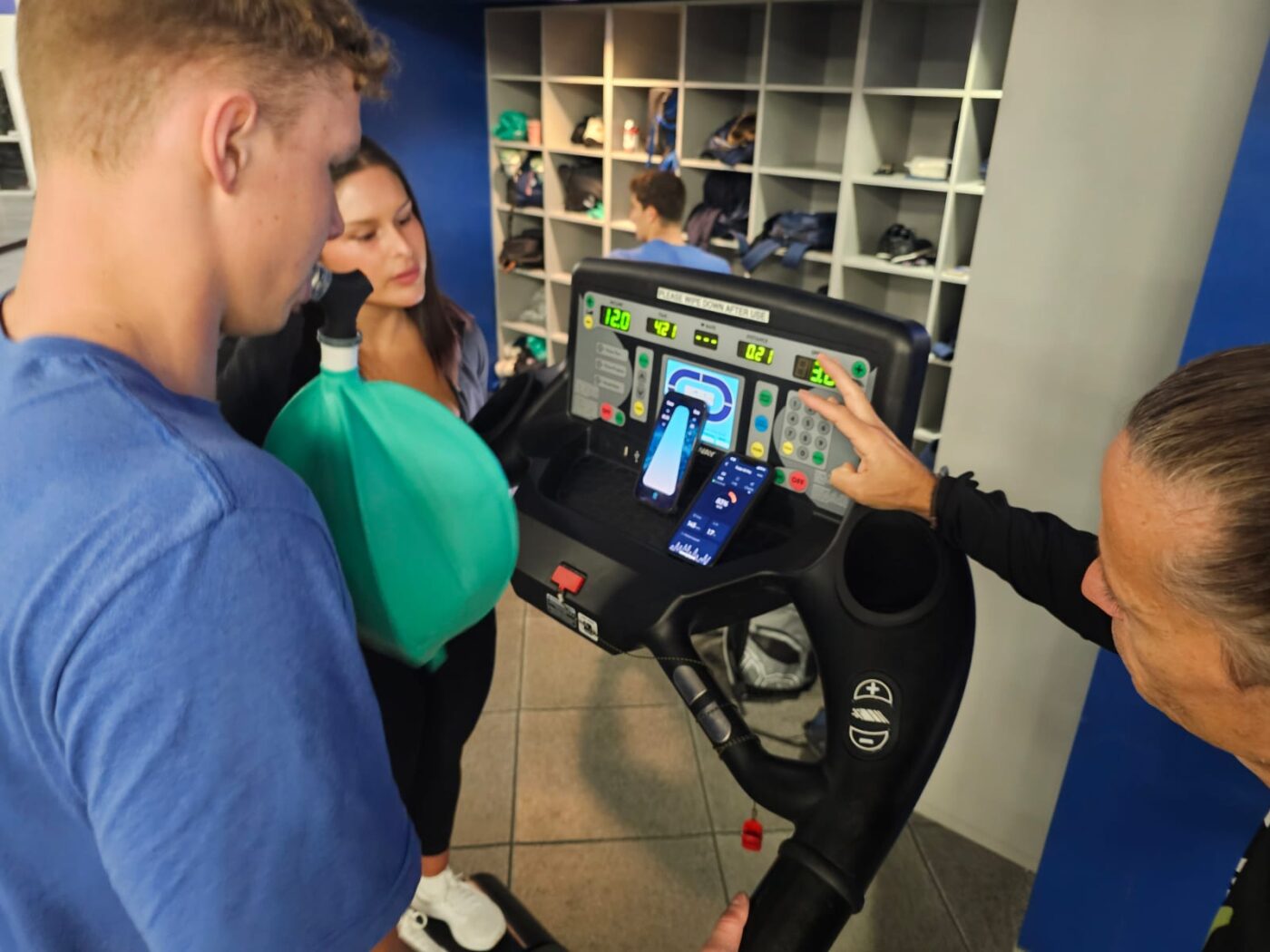
A metabolic health assessment measures how your body uses oxygen and turns food into energy. Instead of estimating from your age and weight, it measures what is actually happening, breath by breath, while you rest and while you exercise.
What Is Measured?
During the assessment you wear a mask connected to a portable metabolic analyzer. It measures the oxygen you take in and the carbon dioxide you breathe out. From those two numbers, the software calculates a detailed picture of your fitness and metabolism:
- VO2 max: the most oxygen your body can use during hard exercise
- Resting metabolic rate (RMR): the calories you burn at rest
- Fuel use: how much energy comes from fat versus carbohydrate at each intensity
- Metabolic flexibility: how smoothly you switch between those fuels as effort rises
- Breathing efficiency: your breathing rate, depth and pattern under load
- Training zones: heart-rate zones based on your own data
At O2Max, the assessment also includes spirometry (how much air you move and how fast) and heart rate variability, a window into recovery and stress.
How Does the Test Work?
Most assessments have two parts. First, you lie quietly for about 10 minutes while the analyzer measures your resting metabolism. Then you do a guided exercise test on a treadmill or bike, where the intensity rises every minute until you choose to stop. The whole visit, including your results review, takes about an hour.
Preparation is simple: no food or caffeine for about 5 hours beforehand, and no hard training the day before. You will also complete a short health questionnaire, because the exercise portion is demanding.
How Is It Different From Blood Work?
Blood work shows what is circulating in your blood at one moment. A metabolic assessment shows how your heart, lungs and muscles perform when you are actually working. They answer different questions, which is why many people use both: lab work through their healthcare provider, and a metabolic assessment to understand and train their fitness.
Who Is It For?
- People who want an objective baseline for their fitness and metabolism
- Longevity-focused adults tracking VO2 max over time
- Endurance and team athletes who want precise training zones
- Anyone who has plateaued and wants to know why
What Happens After?
The value is in what you do next. Your results show which system is limiting you, whether that is oxygen delivery, fuel use or breathing, and your training zones turn that into a plan. Retesting after 8 to 12 weeks shows what changed.
This article is for general education and is not medical advice. Talk to your physician before starting a new exercise program or testing.
Know Your Numbers
A Metabolic & Respiratory Health Assessment measures your VO2 max, resting metabolism and breathing in one visit.