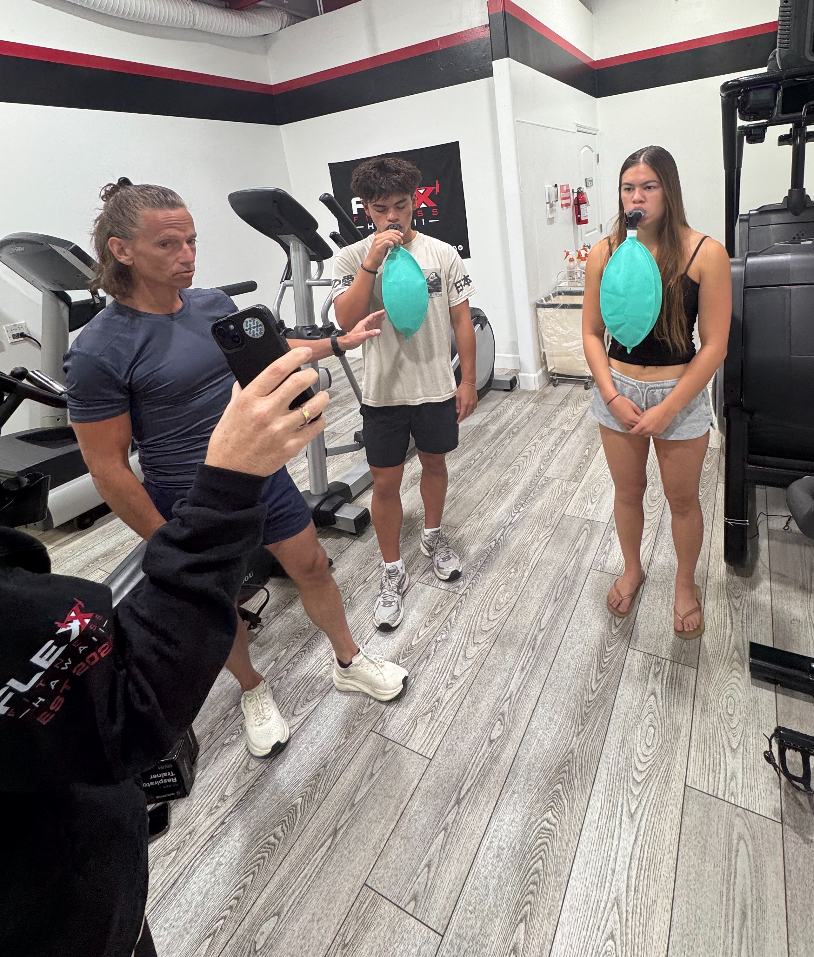
If you can train your legs, your core and your grip, why not the muscles you use more than 20,000 times a day? Respiratory muscle training (RMT) does exactly that, in a few minutes a day.
What Is Respiratory Muscle Training?
RMT means breathing against a resistance, or breathing hard for a set time, to make your breathing muscles stronger and more resistant to fatigue. The main muscle trained is the diaphragm, along with the muscles between your ribs and around your neck and abdomen that help you breathe hard.
The Two Main Types
- Strength-style training: short sets of breaths against an adjustable resistance, using a handheld trainer. Quick and easy to fit in.
- Endurance-style training: longer periods of fast, deep breathing, usually with a device that keeps carbon dioxide levels steady so you don’t get light-headed. Closer to what breathing feels like during hard exercise.
Research in healthy people shows both types can improve endurance performance, with similar results on average. The best choice is the one you will actually do consistently.
A Simple Starting Routine
For a handheld resistance trainer, a common starting point used in research and practice looks like this:
- Sit or stand tall with relaxed shoulders.
- Breathe out fully, then take a strong, fast breath in through the trainer, filling your lungs.
- Breathe out slowly and completely.
- Repeat for 30 breaths, once or twice a day.
- Choose a resistance where the last few breaths of the set are genuinely hard but still controlled.
Follow the instructions that come with your device, and start lighter than you think you need.
How to Progress
- When 30 breaths start to feel easy, raise the resistance a little.
- Be consistent: most programs run at least 4 to 6 weeks before people notice a clear difference.
- Once you have built strength, add breathing drills that match your sport, like shift-length intervals for hockey or controlled breathing at race pace.
- Keep doing a few sessions a week to maintain what you have built.
Common Mistakes
- Shoulders up to your ears: let the breath go low and wide instead.
- Rushing the exhale: breathing out fully sets up the next breath.
- Too much, too soon: stop if you feel dizzy or light-headed, and rest before continuing.
- Only training when you remember: attach it to a daily habit, like brushing your teeth.
Who Should Check First?
Breathing training is safe for most healthy people, but talk to your physician before starting if you have a heart or lung condition, have had a collapsed lung or a ruptured eardrum, are pregnant, or have any other health concern. Your device’s instructions may list other reasons to check first.
Train With a Plan
O2Max respiratory muscle training programs start from your own numbers, set the right loads and progress them week by week, online or in person.
Sources
- Illi SK, Held U, Frank I, Spengler CM. Effect of respiratory muscle training on exercise performance in healthy individuals: a systematic review and meta-analysis. Sports Medicine. 2012;42(8):707–724. Read the abstract
This article is for general education and is not medical advice. Talk to your physician before starting a new exercise program or testing.
Start Breathing Training
Online or in-person programs built around your goals and your breathing data.