Breathing is automatic, so why think about it? Because how you breathe changes how hard exercise feels, how well you hold good posture and how quickly you settle afterward. A few simple habits go a long way.
Nose or Mouth?
Both have a place. At easy intensities, breathing through your nose tends to slow your breathing down and keeps you relaxed. It is a good habit for warm-ups, easy aerobic sessions and recovery.
As intensity climbs, your body needs to move far more air, and mouth breathing (or nose and mouth together) becomes necessary. That is normal. Forcing nose-only breathing during hard efforts just makes them harder.
A useful rule: if you can comfortably breathe through your nose, you are probably in an easy zone. When you can’t, you have moved up.
Should You Match Breathing to Your Movement?
Runners, rowers and cyclists often fall into a natural rhythm, like a few steps per breath in and a few out. A steady rhythm can help you stay relaxed, especially on easy and moderate efforts. You don’t need to count every breath; just notice whether your breathing is calm and even, or ragged.
Breathe Out Fully
When people get out of breath, they often focus on breathing in. Try the opposite: a full, relaxed exhale makes room for the next breath and often calms things down faster than gasping for air.
Breathing in the Gym
- Breathe out during the hardest part of the lift, and in as you return.
- For heavy lifts, many lifters take a breath and brace their core briefly. Keep it short, and avoid long breath-holds.
- If you have high blood pressure or a heart condition, ask your physician how to breathe and brace safely.
After Exercise
Spend two or three minutes lying down or sitting tall, breathing low and slow with long exhales. It is a simple way to start winding down, and a good moment to notice how quickly your breathing settles from week to week.
What Your Breathing Shows on a Test
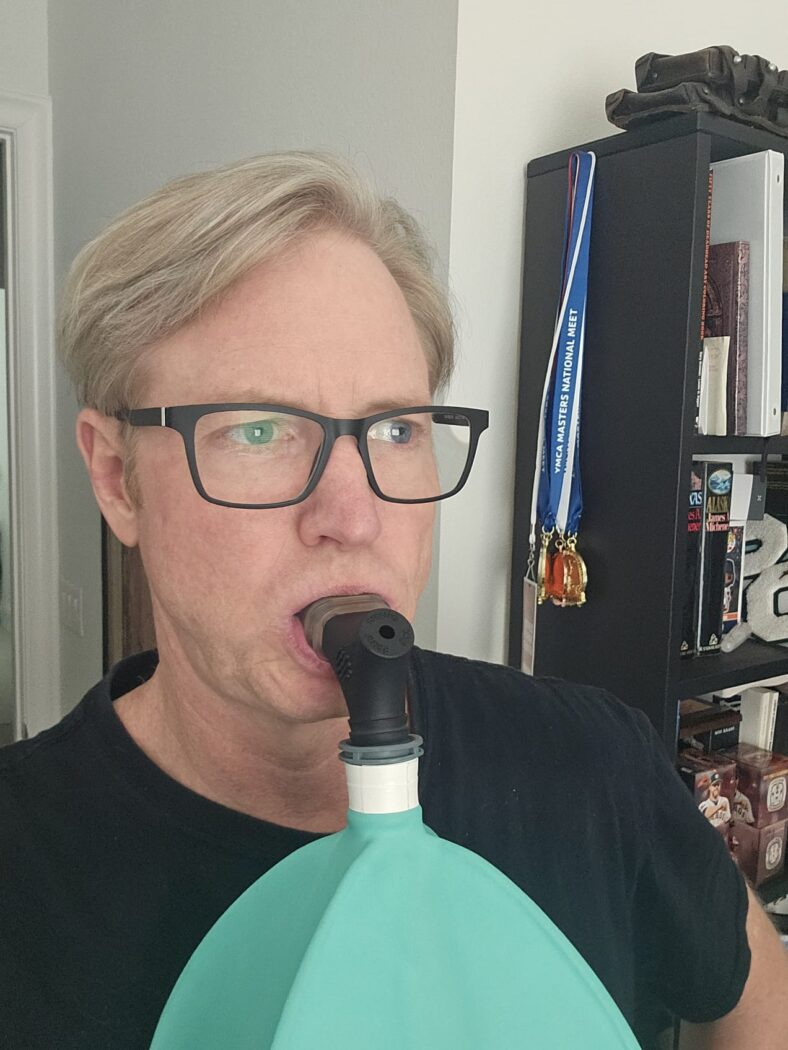
During a breath-by-breath VO2 max test, the analyzer records how many breaths you take per minute and how much air moves with each one, from rest to your peak. That shows whether you breathe efficiently, when your breathing pattern changes and whether breathing might be limiting you. It is one of the things O2Max looks at in every health assessment.
Want to go further? Read Respiratory Muscle Training: How to Get Started.
This article is for general education and is not medical advice. Talk to your physician before starting a new exercise program or testing.
Know Your Numbers
A Metabolic & Respiratory Health Assessment measures your VO2 max, resting metabolism and breathing in one visit.